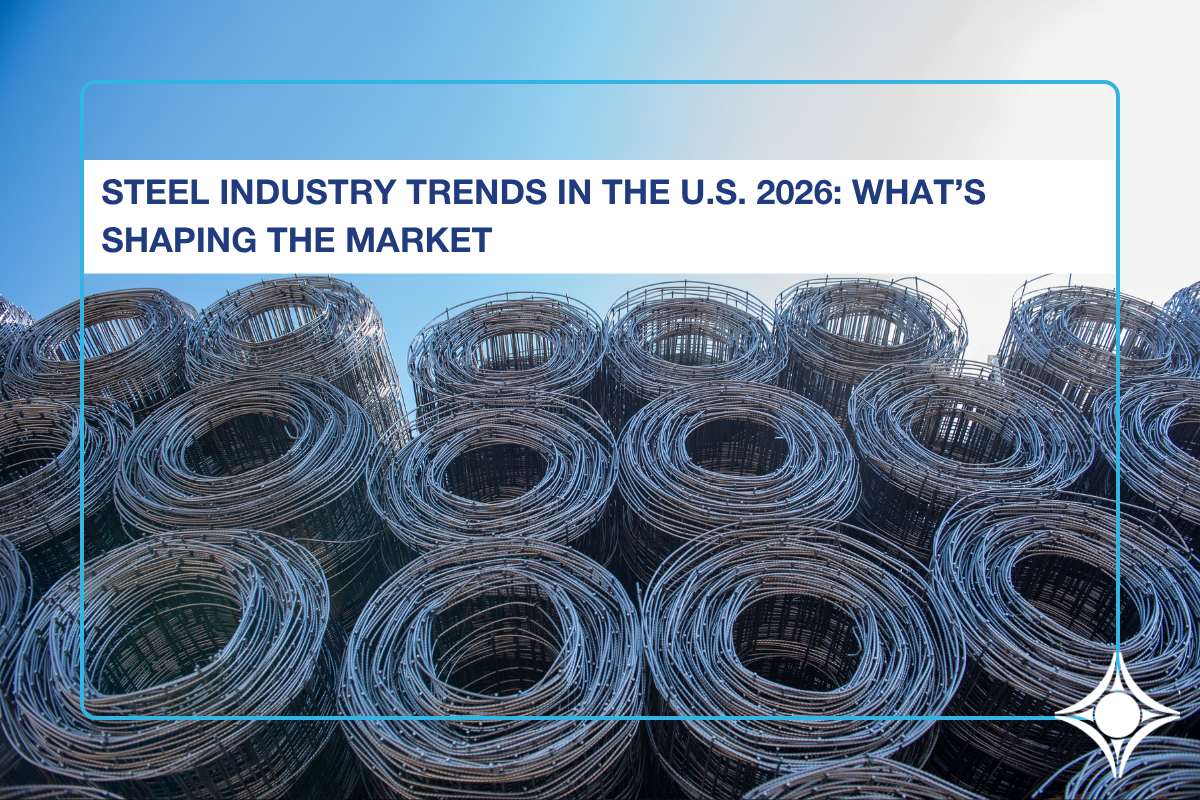
Steel Industry Trends in the U.S. 2026: What’s Shaping the Market
The steel industry in the United States continues to evolve in response to shifting economic conditions, technological advancements, and new market dynamics. As we move into 2026, the sector is shaped by a combination of growth opportunities, operational challenges, and an increasing focus on efficiency and value creation.
A Market Driven by Strategic Demand
Steel demand in the U.S. is expected to remain stable, with moderate growth driven by key sectors such as infrastructure, energy, manufacturing, and data centers. Investments in large-scale projects continue to be a key driver of steel consumption, reinforcing its role as a foundation for economic development.
Efficiency and Operational Excellence as Differentiators
In a competitive environment, operational efficiency is no longer a competitive advantage—it is a requirement. Companies are focusing on optimizing processes, improving productivity, and reducing waste while maintaining high quality standards.
This approach is driving organizations to:
- Optimize production processes
- Strengthen quality control systems
- Improve supply chain coordination
Challenges in a Global Context
While the outlook remains positive, the industry continues to face significant challenges. Global overcapacity, price volatility, and evolving regulatory frameworks demand greater adaptability and strategic vision.
In this context, organizations must balance efficient cost management with sustainable investments that enable them to respond to market dynamics and customer expectations.
Looking Ahead
As the U.S. steel industry moves through 2026, success will depend on organizations’ ability to adapt, innovate, and stay close to market needs.
In an environment of constant change, understanding industry trends is no longer just a competitive advantage—it is a necessity.
At WMC, this context reinforces our commitment to operational efficiency, long-term strategic vision, and close relationships with our customers and partners. Staying connected to market evolution allows us to anticipate change, adapt with agility, and continue delivering consistent value.