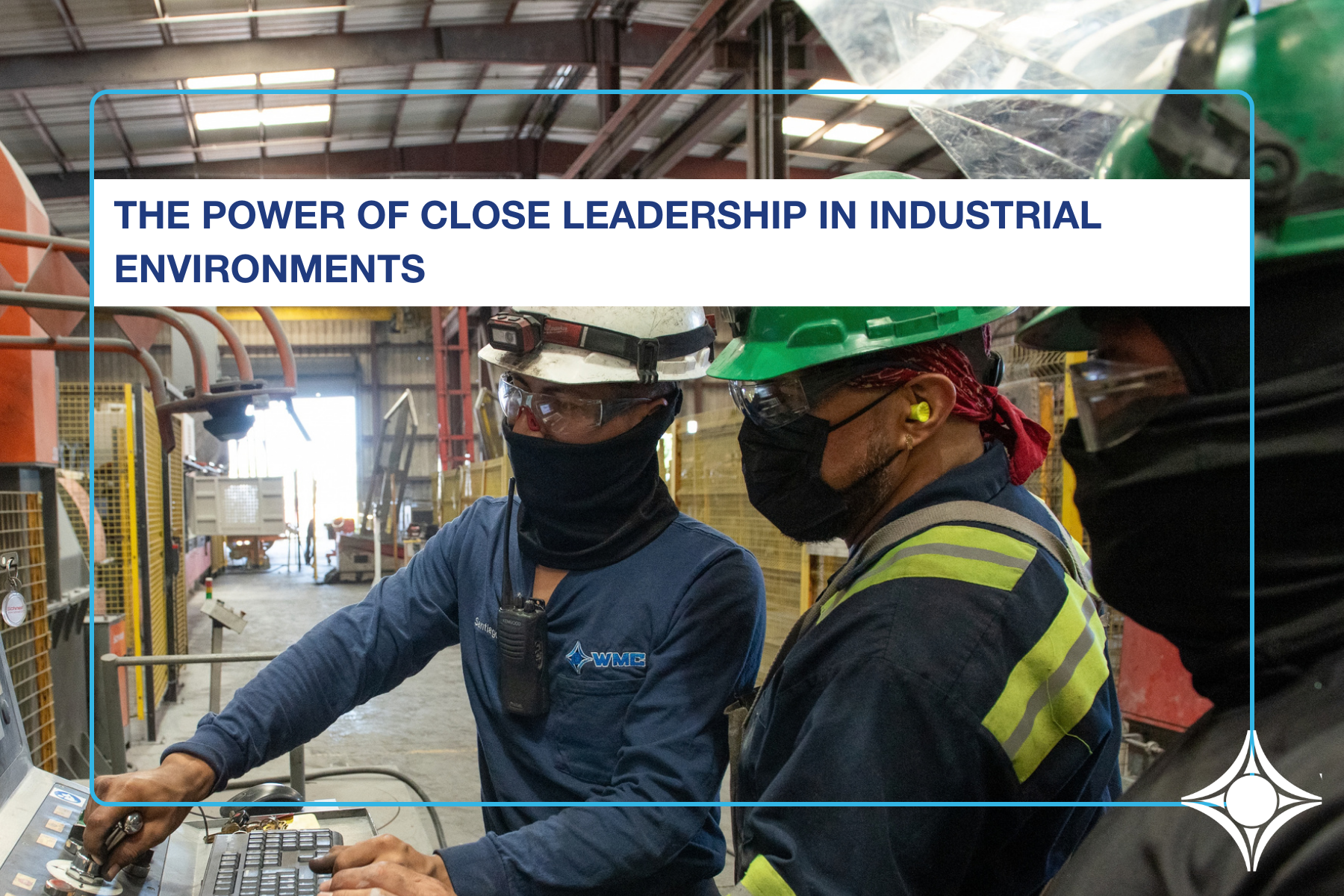
The Power of Close Leadership in Industrial Environments
In industrial environments—where operations demand precision, efficiency, and high safety standards—leadership cannot be limited to strategic direction from a distance. It requires presence, active listening, and alignment between words and actions.
Close leadership is not a passing trend; it is a determining factor in building a strong team culture, that is engaged and sustainable.
Leadership with Presence
In operational settings, a leader’s proximity builds trust. Being present in daily activities, understanding the real challenges teams face, and knowing processes firsthand enable more informed and human-centered decision-making.
Visible leadership:
- Strengthens two-way communication.
- Enables earlier identification of risks and opportunities.
- Reinforces a culture of safety and shared accountability.
Presence is not only physical—it reflects a consistent attitude of support and accessibility.
Active Listening
In industry, speaking about safety goes beyond technical protocols. It also means creating an environment where people feel comfortable raising concerns, reporting risks, and proposing improvements without fear.
Close leadership promotes psychological safety: a space where ideas and warnings are valued. This openness directly impacts incident prevention, continuous improvement, and operational innovation.
At WMC, we reinforce this approach through safety meetings with operators, where we listen firsthand to their needs, concerns, and suggestions. We also promote feedback sessions at all levels of the organization, creating structured dialogue spaces that foster continuous improvement and trust.
Listening is not simply hearing—it is acting accordingly.
Results and Organizational Culture
Industrial environments demand efficiency, compliance, and performance. However, sustainable results are not achieved solely through metrics, but through committed and motivated teams.
At WMC, our organizational culture is not defined in documents; it is built through daily interactions. In our plants and offices, every decision, every conversation, and every feedback exchange reinforces that culture.
Safety meetings and feedback sessions not only strengthen prevention and performance—they also consolidate a culture based on trust, shared responsibility, and respect for people.
Because in high-performing industrial environments, the most effective leadership is present, listens, and acts with consistency.
In industrial environments—where operations demand precision, efficiency, and high safety standards—leadership cannot be limited to strategic direction from a distance. It requires presence, active listening, and alignment between words and actions.
Close leadership is not a passing trend; it is a determining factor in building a strong team culture, that is engaged and sustainable.